
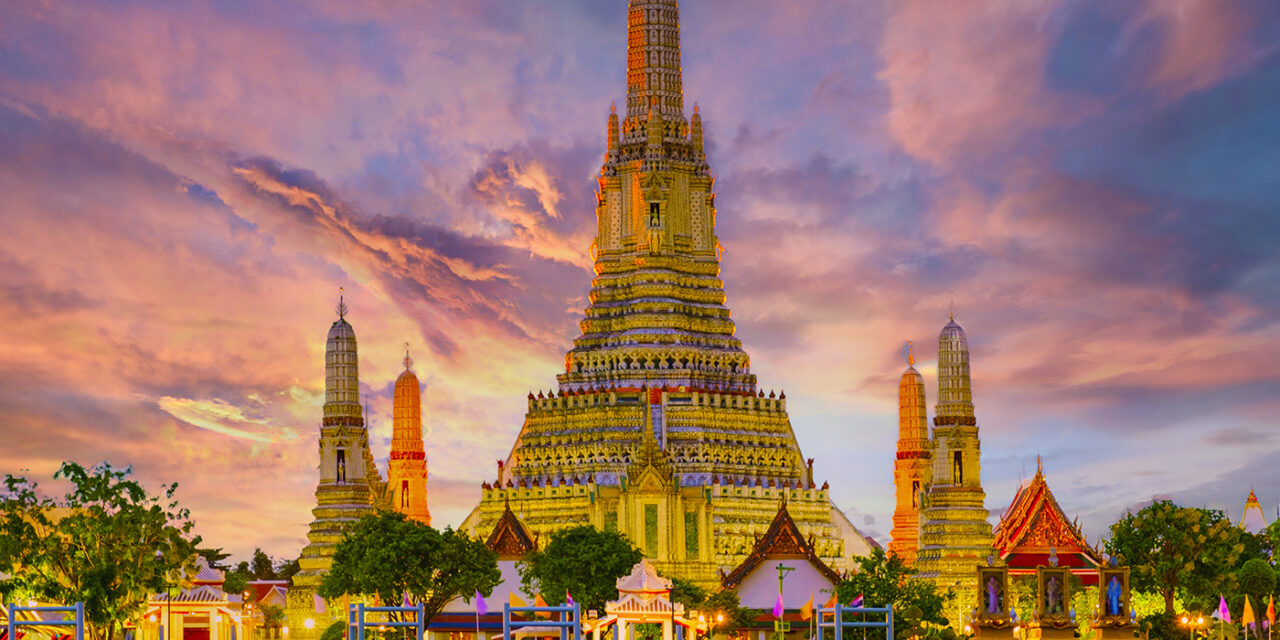
Thailand brings together tropical nature, Buddhist customs, islands, and cities. Interesting facts about Thailand show a country where rare animals live near famous beaches, Bangkok stays busy day and night, and national ceremonies still have strong meaning. Some numbers in this article refer to the late 2010s, so they describe that period and not always the present situation.
Thailand in Numbers, Nature and Island Geography
Thailand had around 69.3 million people in the period covered here. Tourism was also large, with about 60 million tourist visits a year mentioned for the late 2010s. Many visitors came from China, while travelers from Russia, Britain, Australia, and the United States were also common. Repeat visits were normal because many people returned.
Nature in Thailand includes some unusual animals. The bumblebee bat lives in limestone caves in western Thailand and Myanmar. It is often called the smallest living mammal. The animal has a pig–shaped nose, small eyes, and large ears. Mudskippers can live around muddy coastal areas and breathe partly through their skin.
Orchids, Islands and Coastal Places
Orchids are very visible in Thailand. Around 1,500 orchid species are connected with the country, and orchids are often seen in gardens, hotels, and cafes. Thailand has also been important in the export of orchid plants and cut flowers.
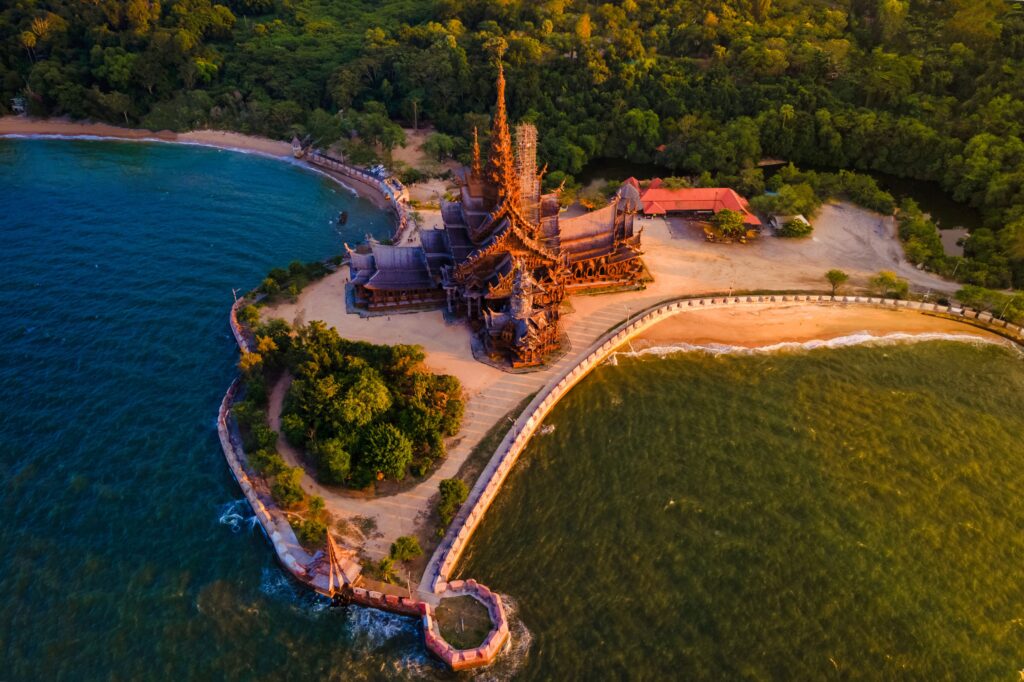
The country has about 1,430 islands. Well–known examples include Koh Phi Phi, Koh Lanta, Koh Tao, Koh Chang, and Koh Phangan. The Thai word “Koh” means island. Phuket is the largest island and is known for beaches, resorts, and nightlife.
Twenty Interesting Facts About Thailand
Many small details help explain Thai history, nature, and everyday customs. These twenty facts show some of the most memorable parts of the country:
- Thailand had around 69.3 million people in the period covered here
- Tourist visits reached about 60 million a year in the late 2010s
- The bumblebee bat is known as the world’s smallest living mammal
- Mudskippers live around muddy coastal zones, including areas near Krabi
- About 1,500 orchid species are connected with Thailand
- Thailand has around 1,430 islands
- Wild elephant numbers became much lower than they were in the past
- Thailand is widely connected with the phrase “Land of Smiles”
- Siam was the official country name before Thailand became established
- The national flag has a symmetrical design and looks the same upside down
- Thailand was never formally colonized by a European power
- Territorial concessions helped the country keep political independence
- Five UNESCO World Heritage sites were recognized during the period described
- Thai food became more visible abroad through support for overseas restaurants
- The national anthem is played in some public settings every day
- Temporary Buddhist monkhood was once common for many Thai men
- Bangkok has a ceremonial Thai name much longer than its international name
- Bangkok received about 21.98 million international visitors in 2018
- Bangkok has very high average temperatures through much of the year
- Songkran brings large water celebrations during the Thai New Year period
History, National Identity and Public Customs
The older international name of Thailand was Siam. The name Thailand became official in 1939. Siam returned for a short period during the 1940s, and later the Kingdom of Thailand became the established form again. Because of this, even the country name shows part of the political changes of the twentieth century.
Thailand is different from many nearby countries because it was not formally colonized by a European power. Britain and France controlled large areas in Southeast Asia, but Thailand kept its independence. Diplomacy, agreements, and territorial concessions were important in this process.
The national flag uses red, white, and blue. Red is connected with life and sacrifice, white with Buddhism, and blue with the monarchy. The design is symmetrical, so the flag has the same look when turned upside down.
Buddhism and Everyday Public Life
Buddhism has a strong place in Thai society. In the past, many Thai men spent some time as Buddhist monks before starting work or family life. This practice is not a fixed social rule now, but temporary monkhood remains familiar in Thai culture today.
The national anthem is another visible public custom. It is broadcast at 8 in the morning and 6 in the evening. It can also be played in cinemas and at sporting events. People normally stand during the anthem as a sign of respect.
Bangkok, Heritage and Thai New Year
Bangkok has a ceremonial Thai name much longer than the short name used internationally. The full form contains references to angels, royal residence, precious gems, and divine protection. The long name became one unusual detail connected with the capital.
Bangkok was also one of the world’s busiest tourist cities in the late 2010s. It received about 21.98 million international visitors in 2018. The city is also known for hot weather. Temperatures stay high for much of the year, even at night, so the average heat remains strong.
Thailand had five UNESCO World Heritage sites during the period covered here. These included historic Ayutthaya, historic Sukhothai, Ban Chiang Archaeological Site, Thungyai Huai Kha Khaeng Wildlife Sanctuaries, and Dong Phayayen Khao Yai Forest Complex.
Songkran is one of the most visible Thai celebrations. It takes place in mid April and marks Thai New Year. Water is central to the event, and people use buckets, water guns, and scented water in public celebrations. Streets can become very wet and busy. Behind this playful side, Songkran still keeps a cultural meaning connected with renewal, respect, and the start of a new year.